
eng
Ecolabel


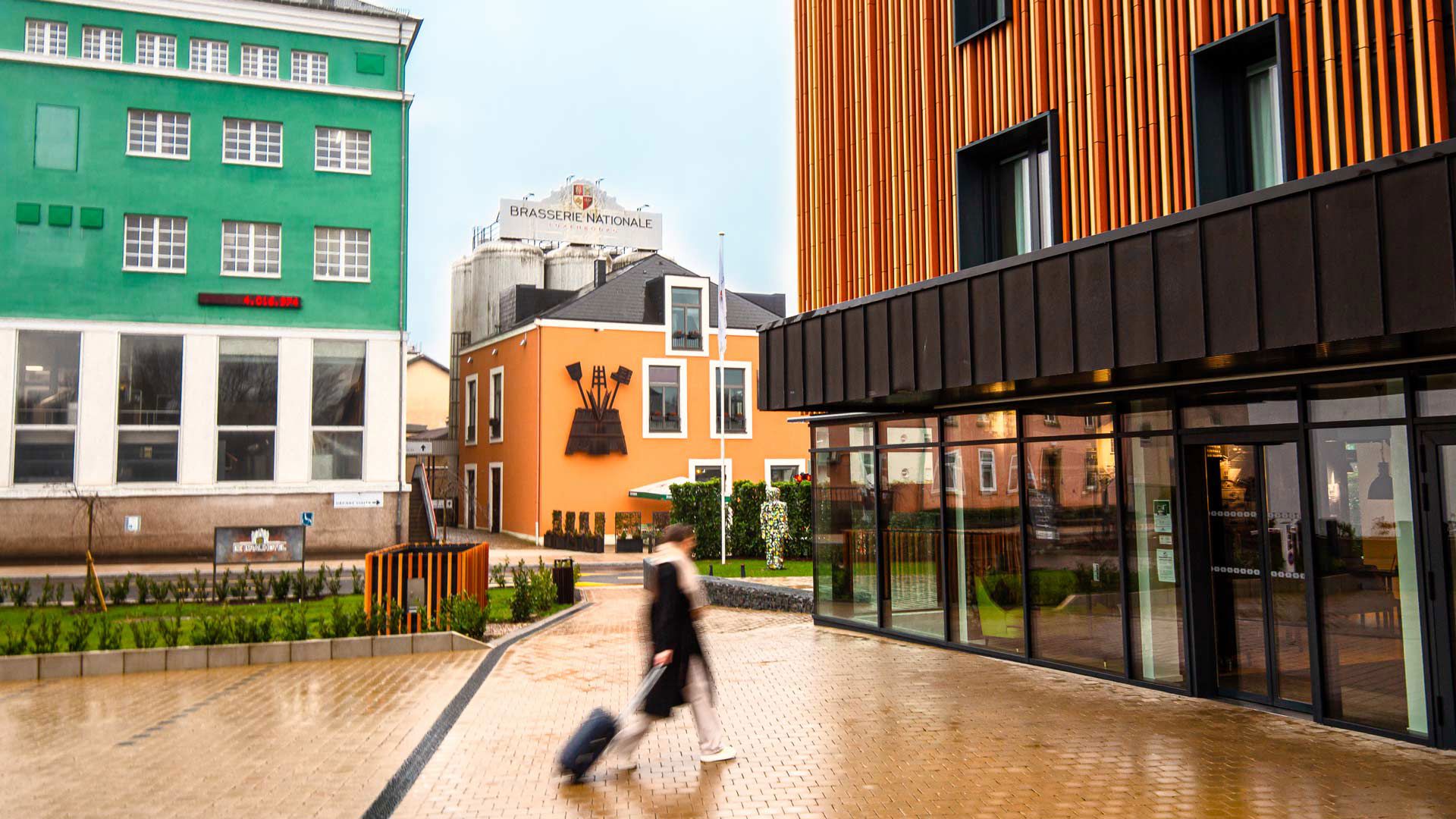
Brewing in Luxembourg City’s Grund district dates back to the late seventeenth century. In 1764, one of the breweries on Plaetis Street became the Funck Brewery, marking the starting point of this brewing history.
In 1780, the Linden family took over another brewery on Plaetis Street. In 1808, the marriage between Anne-Catherine Linden and Henri Funck linked brewing families whose legacy would shape Luxembourg’s beer industry for generations.
In 1844, Jean-Baptiste Bofferding received official approval to build a brewery in the centre of Bascharage. This marked the beginning of the Bofferding Brewery, an important step in Luxembourg’s brewing development.
As transport networks expanded, breweries in Luxembourg developed further and began modernising their operations. During this period, Mathias Funck married Catherine Bricher, and the brewery on Rue Plaetis became the Funck-Bricher Brewery, establishing a new family line.
As transport networks expanded, breweries in Luxembourg developed further and began modernising their operations. During this period, Mathias Funck married Catherine Bricher, and the brewery on Rue Plaetis became the Funck-Bricher Brewery, establishing a new family line.
From 1927 onward, both Bofferding and Funck-Bricher invested in new brewing facilities, cellars, machinery, and refrigeration. Their beers also received international awards in the 1930s, reflecting a strong focus on quality and modernisation.
In 1937, Charles Battin founded the Brasserie Battin in Esch-sur-Alzette. Supported by strong business relationships, a strategic location, and the expertise of brewer Kurt Mocker, the brewery quickly built a solid local reputation.
After the impact of the Second World War, the breweries continued to modernise. Bottling systems were updated, wooden barrels were replaced, and technical improvements increased production, culminating in the automation of beer production at Bofferding in 1974.
In 1975, Bofferding and Funck-Bricher merged to create the Brasserie Nationale. Production was consolidated in Bascharage, bringing together the strengths of both breweries within one company and one main site.
Between 1986 and 1995, Brasserie Nationale carried out major upgrades to its buildings and equipment. New tanks, heating systems, and brewing-room improvements increased capacity, and in 1995 Bofferding beer received the DLG Grand Prize.
During the 1990s, Brasserie Nationale strengthened its distribution network through the acquisition of Hippert Boissons and later Munhowen Distribution. These steps helped expand and organise beverage distribution across the region.
During the 1990s, Brasserie Nationale strengthened its distribution network through the acquisition of Hippert Boissons and later Munhowen Distribution. These steps helped expand and organise beverage distribution across the region.
In 2018, the Funck-Bricher name returned with a new beer brewed by Brasserie Nationale. Made with organic malt and hops, it became the brewery’s only beer recognised as both organic and vegan.
In 2020, Brasserie Nationale introduced Lodyss, its mineral water brand sourced in Bascharage. This added a new chapter to the group’s long-standing connection with local production.